


Sandy blonde hair is proving to be incredibly popular in salons this year. A beige-toned shade, sandy blonde hair resembles sun-kissed beach sand. It also pairs beautifully with almost any skin tone. Plus, there are very few natural blondes that have this perfect mix of warm and cool tones. See every sandy blonde shade below. You'll see how experts achieve these shades and how to care for your own.
What Is Sandy Blonde Hair?
Sandy Blonde is not your regular blonde. It's a nature-inspired hair color, a neutral to warm blonde shade that resembles beach sand color. The tone can range from light brown or yellowish-gray to beige or golden. It's blonde with a touch of brown or gray, resulting in a natural, soft, sunkissed look.
By the way, sandy and dirty blonde hair are not the same. The difference? Dirty blonde is darker and browner—more like earth soil. Nevertheless, both colors overlap. Some sandy blondes have a touch of darkness that makes them almost indistinguishable from dirty blondes.
Its neutral balance of warm and cool undertones can make sandy blonde appear slightly warmer or cooler depending on the lighting. Deeper variations can also overlap with dirty blonde, so the distinction often comes down to the underlying undertones.
Hair colorists from around the world keep GK Hair’s keratin-based formulas in stock. As a brand trusted in over 75 countries, GK Hair sees sandy blonde hair color as one of the most requested blonde colors.

Sandy Blonde Hair Color Characteristics
Colorists will often create this true shade between levels 7 and 9 on a regular color chart. This shade is light enough that it reads blonde but will never be platinum or icy.
A dead giveaway is low-contrast dimension: instead of stark contrasts between light and dark strands, the contrast remains relatively understated. Most tones will be warm gold with just enough ash or brown undertones to keep them from looking brassy or fake.
Sandy Blonde Shade Levels at a Glance
Colorists use a level chart numbered 1 (black) through 10 (lightest blonde) so they can replicate formulas on subsequent visits. See where each shade falls below so you can go to your next appointment with an exact reference.
|
Sandy Blonde Variant |
Level Range |
|
Dark Sandy Blonde |
6–7 |
|
True (Classic) Sandy Blonde |
7–9 |
|
Warm Sandy Blonde |
7–8 |
|
Natural Sandy Blonde |
6–8 |
|
Light Sandy Blonde |
8–9 |
What Is Sandy Hair Color?
For colorists, this term isn't one shade but a family of shades ranging from sandier light brown to a pale, beige-heavy blonde.
All variations of that color have the same sun-faded vibe and low contrast quality because they're created by combining warm and neutral undertones into one formula rather than applying a one-dimensional dye. It's that depth of color that gives sandy hues a soft, lived-in look rather than a flat, single-tone color.
Sandy Blonde Hair vs. Other Blonde Shades
This shade is related to a number of other favorite blondes. Knowing where its family tree branches off from its relatives can help you request the formula from your colorist.
Below, we compare this shade to the three shades we hear clients confusing it with most frequently. If you tend toward cooler colors, check out our ash blonde hair color guide for an in-depth look at that nearby shade as well.
Sandy Brown Hair vs. Sandy Blonde: What's the Difference?
This deeper, browner shade sits one to two levels darker on the color chart. It contains more of the base-level brown color while maintaining that beige faded by the sun aspect.
This variation has had more yellow removed, so beige and gold colors are more present than brown. Many clients will begin at the browner end of the spectrum and lighten toward it over a few appointments instead of going all the way.
Beach Blonde vs. Sandy Blonde
Saltwater and sun create a brighter, bleached-out finish in the summer that falls closer to platinum with warm tones. This shade, by comparison, stays softer and darker with more visible beige and brown tones mixed in.
While both shades are going for that sun-kissed look, the lighter version fades faster and needs more frequent maintenance because it's so close to platinum.
Beige Blonde vs. Sandy Blonde
Neutral is what we call this hair color. It has fewer golden undertones than most sandy shades. This warmer alternative usually has more gold and a bit of brown, so it reads slightly richer.
Hair colorists will often use the lighter neutral as a base and apply toners to it to achieve this warmer look. Neutral and its warmer cousin look nearly the same in dim indoor photography, which makes them so easily confused.
Top 9 Sandy Blonde Hair Colors
One of the perks of sandy blonde is its versatility. It looks dazzling on various complexions - warm, neutral, and cool. There are just so many sandy blonde hair color ideas you can choose from. Here are our top nine suggestions for you:

1. Deep Sandy Blonde
On the surface, this color appears like pure warm blonde hair, but a closer look shows subtle lowlights that give it that beachy glow. You will love this color if you want to switch from a flat, one-dimensional hair color to a dimensional color. It adds depth to your hair without overdoing it. Dark sandy blonde is low-maintenance; that is, you can go for around six weeks before you need a re-touch.
The most nuanced lowlights build most of the depth in this hue, usually around levels 6 to 7. Because it's closest to your natural base color, the overall effect is sun-kissed rather than just dyed. The low contrast between the color and regrowth also makes this one of the easier sandy blonde variations to maintain.

2. Light Sandy Blonde
Light Sandy Blonde is inspired by the Caribbean sand. It contains a more neutral shade than golden or ash, perfect for pale or neutral complexions.
Combine this with a braid or a curl for that fresh-from-vacation feel, reflecting some warmth under sunlight. Unlike dark sandy blonde though, light sandy blonde needs more frequent touch-ups (at least once in four weeks).
Inspired by pale sand that's been bleached by the sun, this shade is usually around levels 8 to 9. Its lighter appearance makes it a bolder choice and means regrowth can become noticeable sooner.

3. Sandy Blonde Balayage
If you're looking for a balance of natural, sunkissed look and dimension, this is for you. Sandy blonde balayage presents a large volume of cool highlights and a sprinkle of warmth.
This color is easy to get because balayage already gives various degrees of lightness to the hair, as well as diverse warm and cool tones. It's also perfect if you want to grow out your hair naturally without having that awkward change between your hair roots and the dyed hair.
The magic of balayage lies in the hand-painting: color is brushed onto selected sections of the hair to create softer, sun-kissed dimension that typically transitions from darker roots to lighter ends. This blended placement can make regrowth less noticeable than traditional foiled highlights.

Do you want ideas on blonde balayage styles to try out this season? Here are 15 Bright Blonde Balayage Ideas.
4. Cool Sandy Blonde
This tint should be your go-to if you have naturally cool-toned hair. Cool sandy blonde resembles dark sandy blonde but has more blue and purple overtones. The overtones neutralize any brassy and yellow tones present and enhance its ashy, cool appearance.
5. Silvery Sandy Blonde
Blending sandy beige's warmth with the icy tones of silver, this color creates a classy look. Silver sandy blonde is versatile. It augments various skin tones and can be styled in many ways. Some of the common styles are waves, clean cuts, or blowouts.
6. Dimensional Sandy Blonde
You will need no less than two different tints to mimic the sand's dimensions. The colors may have marked tones like gold and ash or similar tones (with just one or two levels of difference in lightness or darkness). You don't have to worry about a harsh root line since your natural hair color will be preserved or blended to add depth.
That said, research shows that UV radiation can induce color loss in dyed hair, so you need to protect your hair. GK Hair’s Lock Me Color Masque does a good job of maintaining your hair color and protecting it from UV damage.

7. Sunkissed Sandy Blonde
If you're new to hair coloring, we recommend this for you. This hue mirrors the hair's natural light under the sun. It may require less lighting and gives a laid-back, beachy, dimensional vibe.
8. Layered Sandy Blonde
This is more of a style than a color idea. However, it actually affects the hair’s appearance, hence its inclusion. Layered sandy blonde hair blends the beige sandy color with a layered haircut to add movement and dimension. This style is special because each layer reflects light differently, adding natural highlights to your hair.
9. Warm Sandy Blonde
This looks more like desert sand than beach sand; it is golden and suits people with warm skin complexions. Warm sandy blonde is a specific warm blonde infused with a cool tone to balance its warmth. You can add a few highlights to enhance its reflection and give your hair that dazzling, sparkling, sunkissed look.
Warm sandy blonde typically falls around levels 7 to 8. The warmer tones can complement deeper skin tones, while a cool-toned glaze can help balance the warmth and prevent the color from appearing overly brassy or orange. Face-framing highlights can add further dimension and reflect more light.
Choosing the Right Sandy Blonde Shade
Sandy blonde isn't one fixed color. The best variation for you depends on your natural hair color, skin's undertone, desired level of maintenance, and budget. A darker sandy blonde that stays close to your natural base generally requires less upkeep, while a much lighter shade can make regrowth more noticeable and require more frequent salon visits.
How Sandy Blonde Looks in Different Lighting
Sandy blonde can look noticeably different depending on the lighting. Warm salon lighting may make a shade appear softer or more golden, while natural daylight can reveal cooler undertones or make yellow and brassy tones more noticeable.
Fluorescent lighting can reduce the appearance of warmth, while direct sunlight can emphasize golden tones and highlights. For this reason, it's worth checking your intended shade in natural daylight before deciding on your final color.
Stylist's Corner: If you're lightening your hair before toning it, ask your colorist about the appropriate timing between the lightening and toning services. Freshly lightened hair can be more porous and may absorb toner more readily, which can result in a cooler or ashier finish than intended.
Natural Sandy Blonde Hair
Natural sandy blonde is designed to look less obviously colored. A faded root melt can create a gradual transition from the natural roots into lighter lengths, reducing the appearance of a harsh regrowth line.
This makes it a particularly useful option if you like the sandy blonde look but want a softer grow-out and less frequent maintenance.
Popular Ways to Wear Sandy Blonde Hair
Sandy blonde can be worn as an all-over color, highlights, or balayage. The coloring technique you choose affects the amount of contrast, brightness, grow-out, and maintenance.
Sandy Blonde Highlights
Traditional foil highlights create a more uniform lift from the roots through the lengths. Compared with balayage, they generally produce more noticeable contrast and brightness.
Because the color begins at the roots, regrowth can become visible sooner. Touch-ups are commonly needed every several weeks, depending on how quickly your hair grows and how much contrast you have with your natural color.
Sandy Blonde Balayage
Balayage uses hand-painted placement to create a softer transition from darker roots to lighter lengths. The result is generally more gradual and sun-kissed than traditional foil highlights, with less obvious regrowth. See our roundup of blonde balayages for even more placement ideas.
On curly or coily hair, strategically placed balayage can emphasize the shape of the curls and create additional dimension as the natural curl pattern moves.
Highlights vs. Balayage at a Glance
|
Technique |
Highlights |
Balayage |
|
Application |
Foil, saturated from root to tip |
Hand-painted onto the surface |
|
Root line |
Visible as hair grows out |
Soft, blended root melt |
|
Contrast |
Higher, more dimensional |
Lower, more natural |
|
Touch-up frequency |
Every 6 to 8 weeks |
Every 8 to 12 weeks |
|
Best for |
A brighter, noticeably lighter result |
A low-maintenance, sun-kissed finish |
How to Get Sandy Blonde Hair
As mentioned above, there are several sandy blonde color ideas, so the methods to get each one also vary slightly. You will need to consult with your stylist to get a professional opinion on what to do. That being said, getting sandy blonde usually involves three to four steps.
One, your hair needs pre-lightening if it is darker than a medium blonde shade. Then, the lighteners are mixed into formulas (depending on your desired hue) and applied to your hair. You start with a warm or neutral blonde base, which can now be texturized using highlights or lowlights to produce the natural, tan effect. Lastly, you need a toner to deal with brassiness and refine the tint.
Choosing a Sandy Blonde Hair Dye
If you are starting darker than a medium blonde, they will have to lighten your base level first. They will apply a formula that is either warm or neutral-based to get you closest to your desired tone. Then they will add highlights or lowlights for dimension. Finally, they will use toner to cut down on any brassiness.
Low-Commitment Ways to Try Sandy Blonde
Not ready for such a big commitment? Try these ways to experiment with the shade:
-
Face-framing highlights instead of dyeing all of your hair. These will last anywhere from 8-12 weeks and only apply to a small section of hair, so they make the growing-out process nearly unnoticeable.
-
Semi-permanent gloss or toner that will wash out in 4-6 weeks. Use it in conjunction with a color-safe shampoo, like our Silver Bombshell Shampoo, to maintain your trial tone without it fading splotchy.
-
Root spray or hair chalk for one night out or photo shoot. It will wash out with your next shampoo, so there is no commitment at all.
-
Clip-in hair extensions in the same shade to try out the look for one day. No dye services are needed, and you can return them if you don’t like the color.
Salon vs. At-Home Coloring
Salon color gives you a colorist who can evaluate your underlying natural color and customize the formula throughout. This matters tons when it comes to a multi-tonal color like this.
Box dye or gloss kits are much, much cheaper, but they lay down 1 flat formula with no customization for what your color started at. So the result can be all over the place. If you're coloring at home, start with demi-permanent glosses or toners instead of permanent color if you're starting at a light or medium base.
Demi-permanent colors have the color deposit without the lift. And they are slightly easier to correct if you overdo it and get too warm or too cool. These are general US price ranges and not specific quotes because prices vary based on salon and region: Expect to pay $150-$400 for balayage/highlights at a salon versus $10-$25 for box dye or home gloss.
Price is why box dye is so popular. But it's also why so many people find themselves sitting in a salon chair weeks later to correct bad color.
If you're looking to achieve sandy blonde at home, GK Hair Juvexin Cream Color offers several Sand Blonde shades, from 6.7 Dark Sand Blonde to 10.7 Ultra Light Sand Blonde, allowing you to choose a depth closer to your desired result. The appropriate shade depends on your starting hair color and the level of blonde you want to achieve.

Caring for Sandy Blonde Hair
Like every other colored hair, sandy blonde needs maintenance. Do the following to keep the beachy tresses fresh:
-
Use color-protecting products like GK Hair’s Ultra Blonde Bombshell Masque to keep brassiness at bay.
-
Keep your color fresh by washing with GK Hair’s Silver Bombshell Shampoo.
-
Always use GK Hair's ThermalStyleHer Cream to protect your hair before heat styling.
-
Visit your stylist for touch ups at recommended intervals.
Is Sandy Blonde Hair Hard to Maintain?
Sandy blonde can be relatively easy to maintain, especially when the shade is close to your natural hair color. Softer transitions between the roots and lighter lengths can make regrowth less noticeable than a high-contrast blonde. However, maintaining the tone still requires attention to brassiness, fading, and moisture.
Preventing Brassiness
Sandy blonde can develop unwanted yellow or brassy tones between salon visits. Violet-pigmented toning shampoo can help neutralize unwanted yellow tones because purple sits opposite yellow on the color wheel.
GK Hair’s Silver Bombshell Shampoo uses violet pigments to help counter unwanted yellow and orange tones while cleansing and conditioning the hair. It is suitable for blonde, bleached, or gray hair that needs help maintaining a cooler, brighter tone between salon visits.

Apply to damp hair 1–2 times per week. Leave on for one to two minutes, then rinse thoroughly. Avoid daily application, as overuse can lead to over-toning and a slight purple hue.
Keeping the Color Vibrant
Sun exposure can contribute to fading and dryness in color-treated hair. The American Academy of Dermatology recommends protecting color-treated hair from sun exposure, including wearing a wide-brimmed hat, because UV exposure can leave dyed hair weak, dry, rough, and faded. A leave-in conditioner with UV filters can also provide additional protection.
Regular conditioning can help maintain softness and manageability after washing and sun exposure. GK Hair’s Lock Me Color Masque is designed for color-treated hair and provides color-safe UV/UVA protection while conditioning and smoothing the hair.
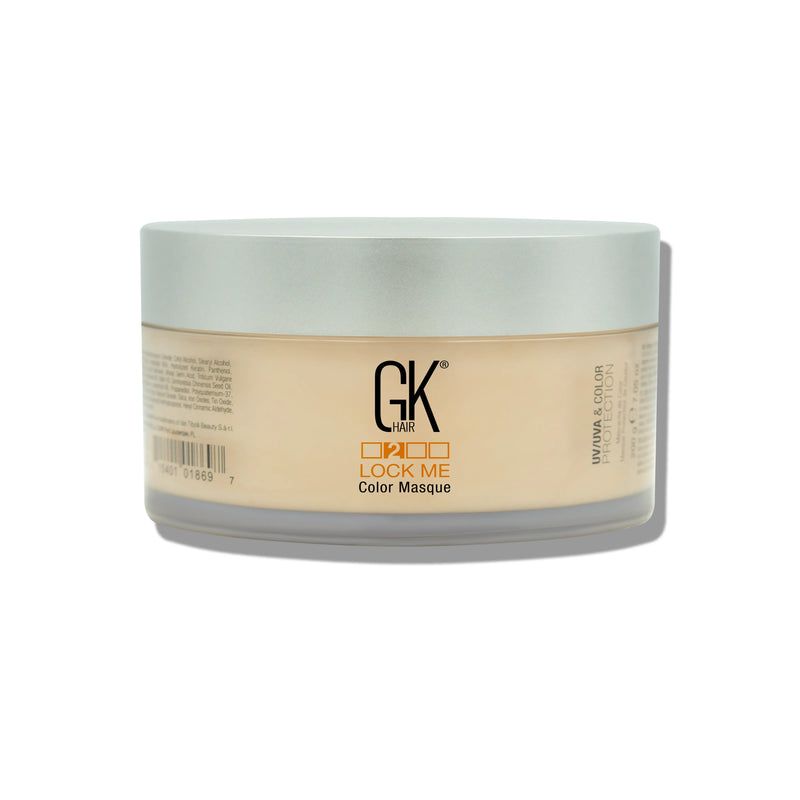
Usage: After shampooing, apply every other week to clean hair and leave on for 5–20 minutes, then rinse thoroughly. Check the product page for the current ingredient list and product details.
Frequently Asked Questions
Is sandy blonde a warm or cool hair color?
Cool tones just aren't what this color is known for. It's usually a warm formula built upon beige and golds, instead of ash or platinum. You can make it cooler by adding more ash or neutralizing gold with toner, but the foundation formula is already warmer. Most clients fall somewhere in between, warm enough that they aren't dull but cool enough that they aren't brassy.
Which skin tones suit sandy blonde hair best?
This shade works on almost all skin tones since colorists can go warmer or cooler to complement your skin. Fair and neutral skin tones suit lighter, beige-forward sandy shades, while deeper skin tones pair well with richer, warmer sandy tones. Not sure which you are? Use the vein test: greenish veins mean warm undertones, and blue or purple veins mean cool.
What's the difference between highlights and balayage for sandy blonde hair?
Foils are used to apply highlights to achieve saturation from root to tip. Balayage is painted onto the surface of the hair, creating a softer, less dramatic effect. Due to higher contrast and a visible root line as hair grows, highlights require maintenance sooner. Because balayage blends in with natural regrowth, it's the less labor-intensive of the two.
Can you achieve sandy blonde hair on dark hair?
Yes, this look on dark hair is possible, though you'll need to pre-lighten first, often over multiple salon visits. Professionals recommend staying within three shades of your natural color per session, since lifting further requires higher-volume developer and causes more damage. Dark hair is usually lightened gradually, with toning in between.
How do you keep sandy blonde hair from fading?
Maintenance for this shade really boils down to two factors: limiting UV damage and washing gently. Stick to color-safe, sulfate-free shampoo, rinse with cold water as often as possible, and incorporate a UV-protecting mask into your weekly routine. A hat in direct sunlight and fewer washes overall will help keep your color from lifting quickly.
Your Sandy Blonde, Sorted
Sandy blonde hair pays dividends when you choose the correct shade and take care of it afterward. Select a depth to complement your base, then pick between highlights or balayage depending on the maintenance level you desire. Keep brass and fading away with a toning shampoo and color mask until next time. Want to preserve your color? Shop our Color and Blonde Care products now.


Leave a Comment